
Years ago, I was working in an agency, doing some discovery user research. A user was trying to make sense of a webpage. The page was full of bureaucratic language and jargon. The user frowned, squinted at the screen and tried again. Then, exasperated, they threw their hands in the air and said, “Plain English is plain English. You know?”
I was taking notes. I jotted down those words on a post-it: Plain English is plain English. That post-it ended up stuck to a piece of butcher’s paper on the wall during our research synthesis. And it stayed there. For months. I found myself pointing to it constantly. This is what we mean. This is what users are asking for.
By the time we finally took it down, it was dog-eared and discoloured — its corner smudged by the oils of a thousand fingerprints. It had been touched, referenced, debated. It had lived a full and useful life.
When I left that role, my team gave me a gift: a plaque engraved with those same words. Plain English is plain English. It’s moved with me from job to job, house to house. It’s still with me, years later.
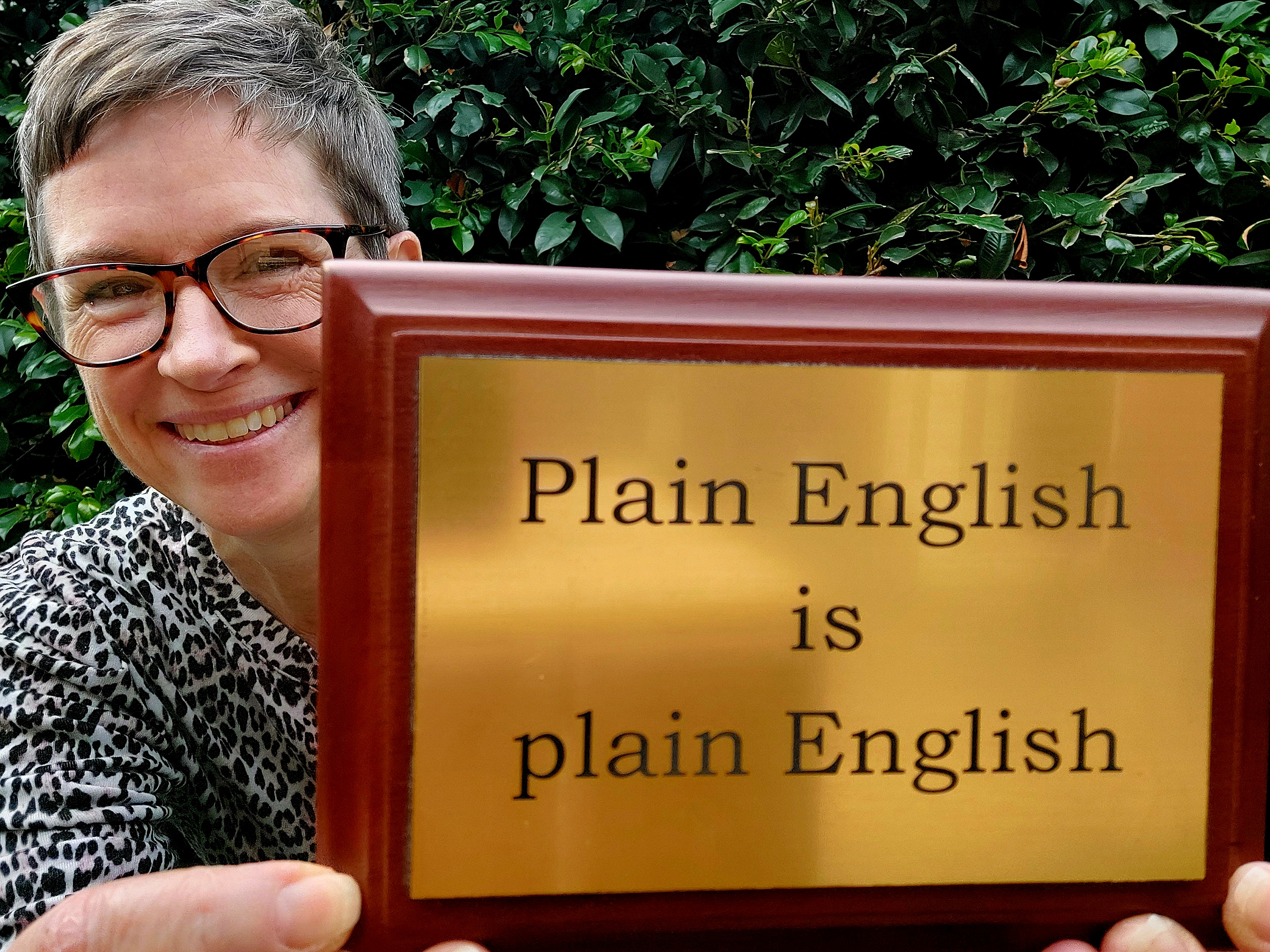
Because, ultimately, that’s what my work comes down to.
Most websites, most policies, most forms, most digital services, would be infinitely better if the plain English fairy waved her magic wand over them. Or the AI fairy. Either would do. The result would be the same: clarity, accessibility, and respect for the people who need to use what we create.
There are, of course always other things that need to be resolved to improve a website. Information architecture, search engine optimisation (SEO), headings and and links all need our love and attention. But we can always start by rewriting everything in plain English. It’s always a place to start, when we don’t know where to start.

 Content philosophy
Leave a comment